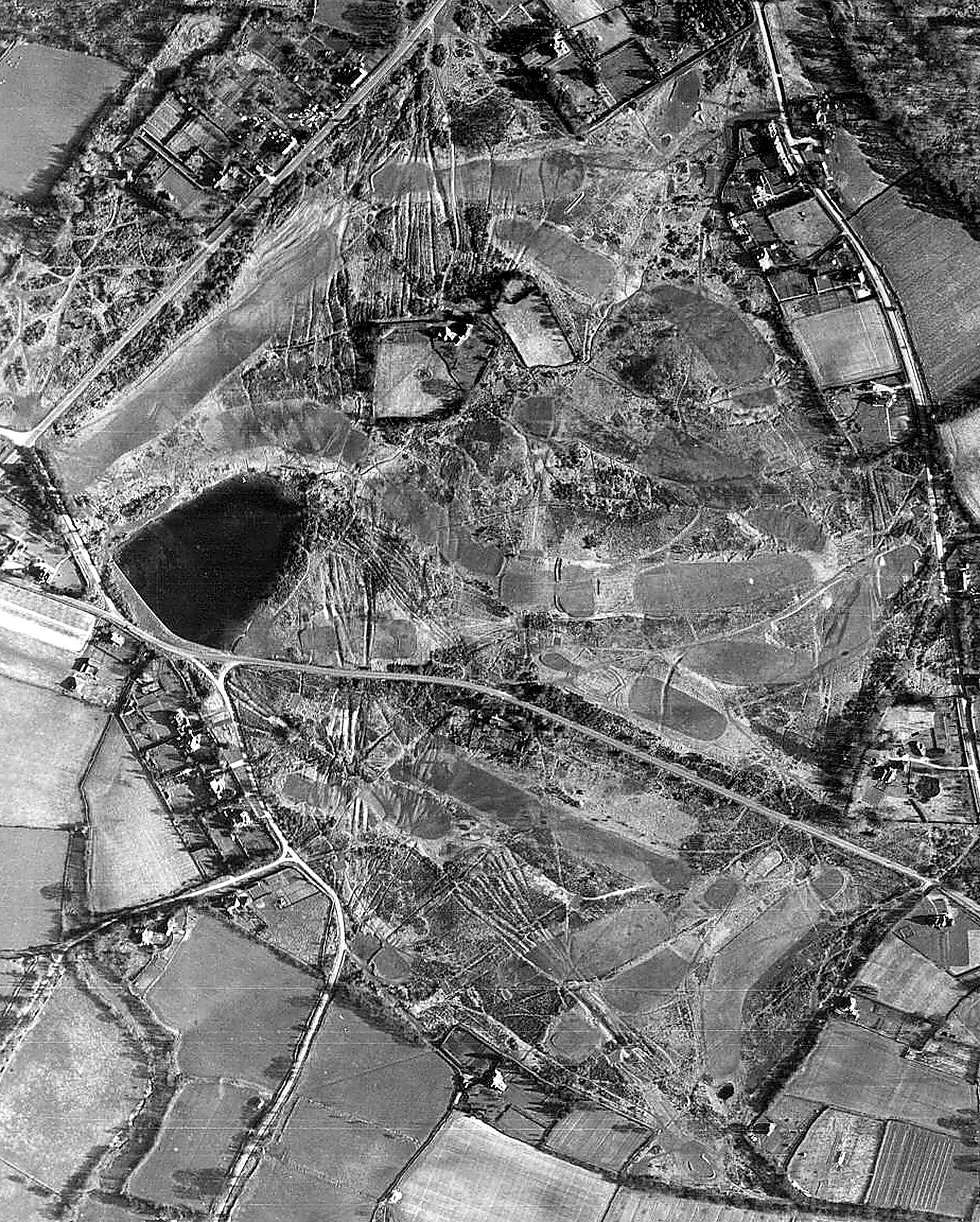
Piltdown 1947
Two very noticeable and possibly interrelated features: the deep gulleys which criss-cross the course and the total absence of trees. The gulleys "may have been tracks used to drag trees to the Ouse, which was navigable up to the Horse and Barge Inn, near Shortbridge. When one track became too deeply work and muddy to be used, the teams of horses and their huge wagons would carve another beside it" (PGC centenary book). These trees were required for shipbuilding in the 18th century, and then for the iron industry which developed in the Weald and required charcoal to fire the furnaces. Have a thought for the poor horses next time you find yourself hitting the ball from one of those ancient gulleys!
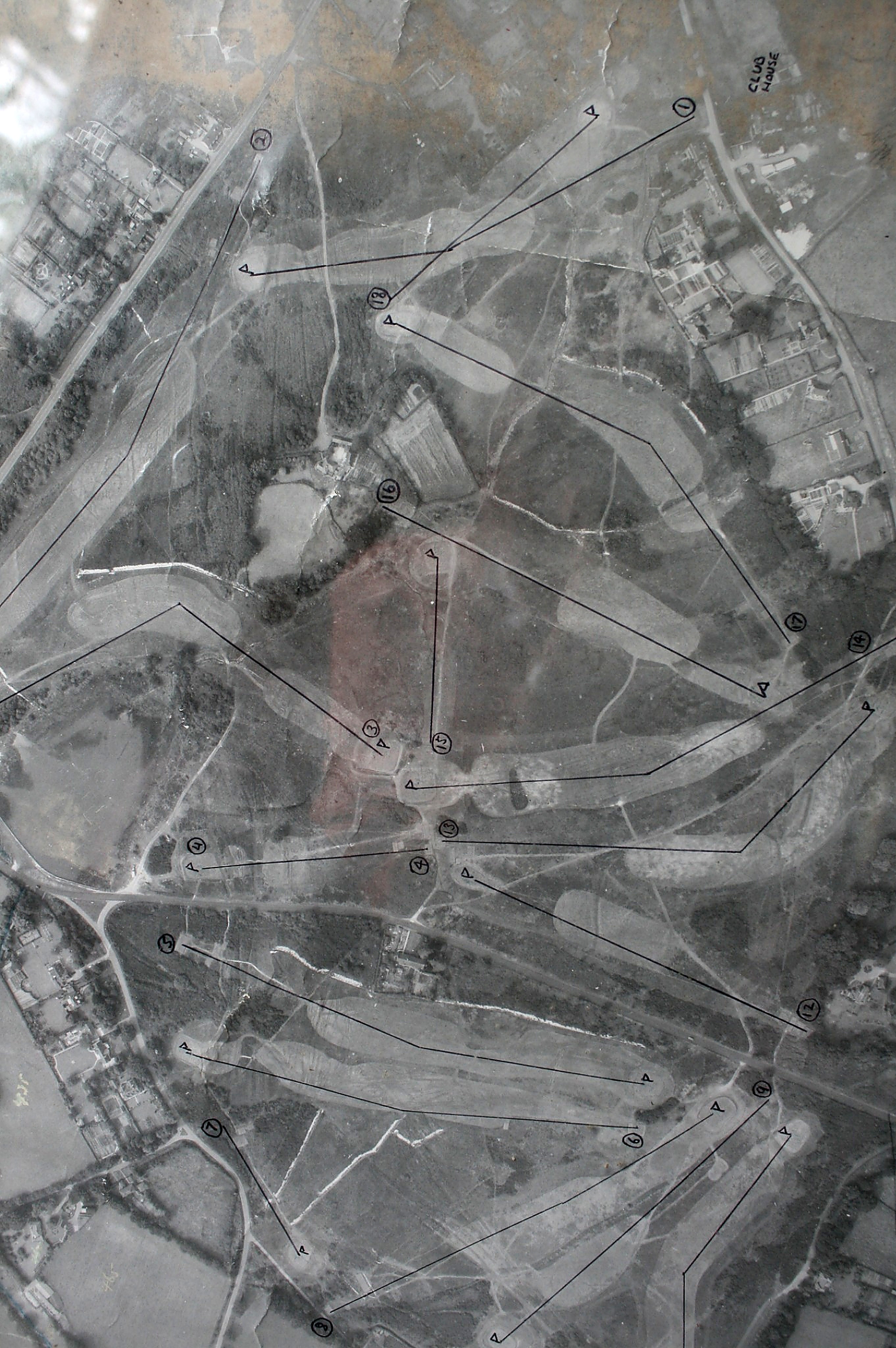
Piltdown 1961
This photo is in poor condition, but it shows where the 18th green used to be. This spot is now used as a turf nursery.
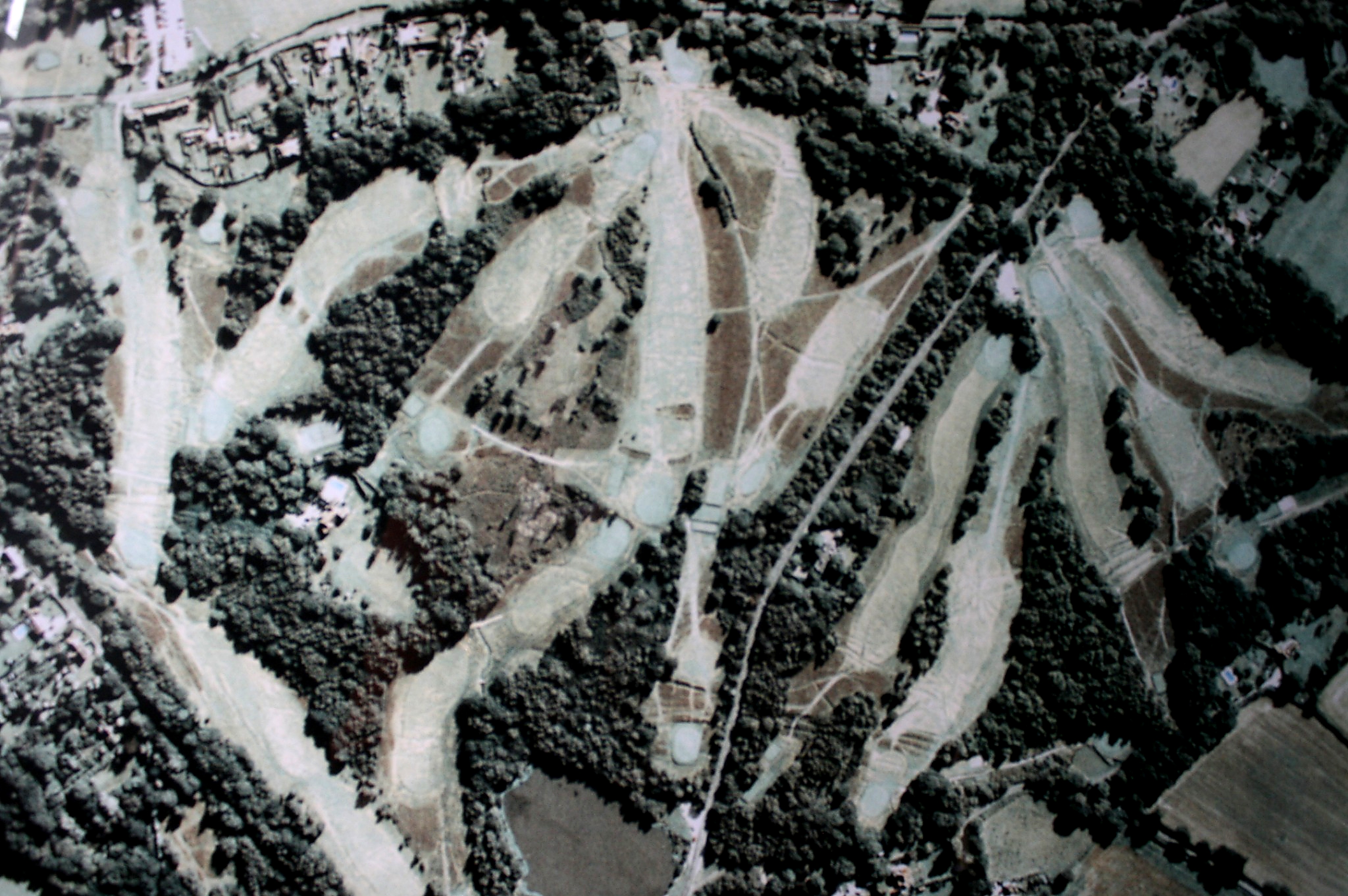
Piltdown 1999
A massive change, with trees everywhere, even though by that time, the club's programme of tree clearance had started: a dense wood used to fill the area between 14th, 15th and 16th.
We also unearthed two very interesting watercolours, which are now up in the dining-room: one shows the original ten holes (1904-1908), and the other the 18 hole course as it was until the 1930s. Go and have a look to see how it's changed (the 18th was a par 5!).
Finally, we found a set of 6 postcards from an unspecified date and put them up by the printer in the office. They show 5 holes from what appears to be the original 18 hole layout. Our local historian Harvey worked out that as what is now the 3rd hole was at the time split in two, with the current 3rd green being the 4th green at the time. This means that the holes in the postcards are one ahead: the 5th is the current 4th, the 9th is the current 8th and the 16th is the current 15th. This last postcard was put onto canvas and hung at the top of the stairs to the ladies' changing room. It sounds complicated but you'll understand when you look at the postcards. See you soon!
|